The Skill Portability Snare
Something I’ve gradually come to believe, as a game designer: Skill portability between games and genres can be a creative and experiential trap. Fundamentally, I…
Max Nichols' Game Design blog

Something I’ve gradually come to believe, as a game designer: Skill portability between games and genres can be a creative and experiential trap. Fundamentally, I…

I realized that despite working on Destiny and Destiny 2 encounters for years, I’ve never really talked in any sort of detail about what goes into that. Let’s change that!
If you haven’t done it already, it’s worth reading my Fundamentals of FPS Gameplay article, which is a 5-10 minute read that I originally wrote for this Destiny article.

At the most basic level, FPS gameplay is the interplay of line-of-sight, movement, facing, cover, and timing between a player that can shoot what they see, and at least one opposing entity that can shoot back. Let me illustrate a little bit.

I hooked up my 360 and Guitar Hero 2 and was shockedpikachu.jpg that my skills had decayed enough that I had to play Medium, hahah.
There’s a lot of great stuff about the game, but I think it is really an absolute masterclass in difficulty ramp design, and teaching players mastery. It’s worth study.

I was asked to provide a blurb for this GamesRadar piece, which I was more than happy to do! I wrote about how impressed I was at the Zelda team’s success attempt to find ways for players to see consistent and predictable results from physics gameplay.

The Legend of Zelda: Ocarina of Time was a towering achievement, a game that raised the bar far above all that had come before.
In 1998, 3D games were not new: 3D games with first-person, top-down, and side-scrolling viewpoints had already arrived, as had third-person platformers. But nobody had yet made a third-person game with both strong camera control and melee combat, especially not in a vast, immersive world. There was no blueprint, and design pitfalls awaited any team that tried.
Ocarina of Time solved that puzzle decisively. It was a model for making third-person 3D action games that were approachable and ambitious. It broke new ground in camera control, melee combat, level design, and world design. It achieved a high standard for readability and approachability; nothing like it had ever been made before, and it set a high-water mark that wouldn’t be surpassed for years.
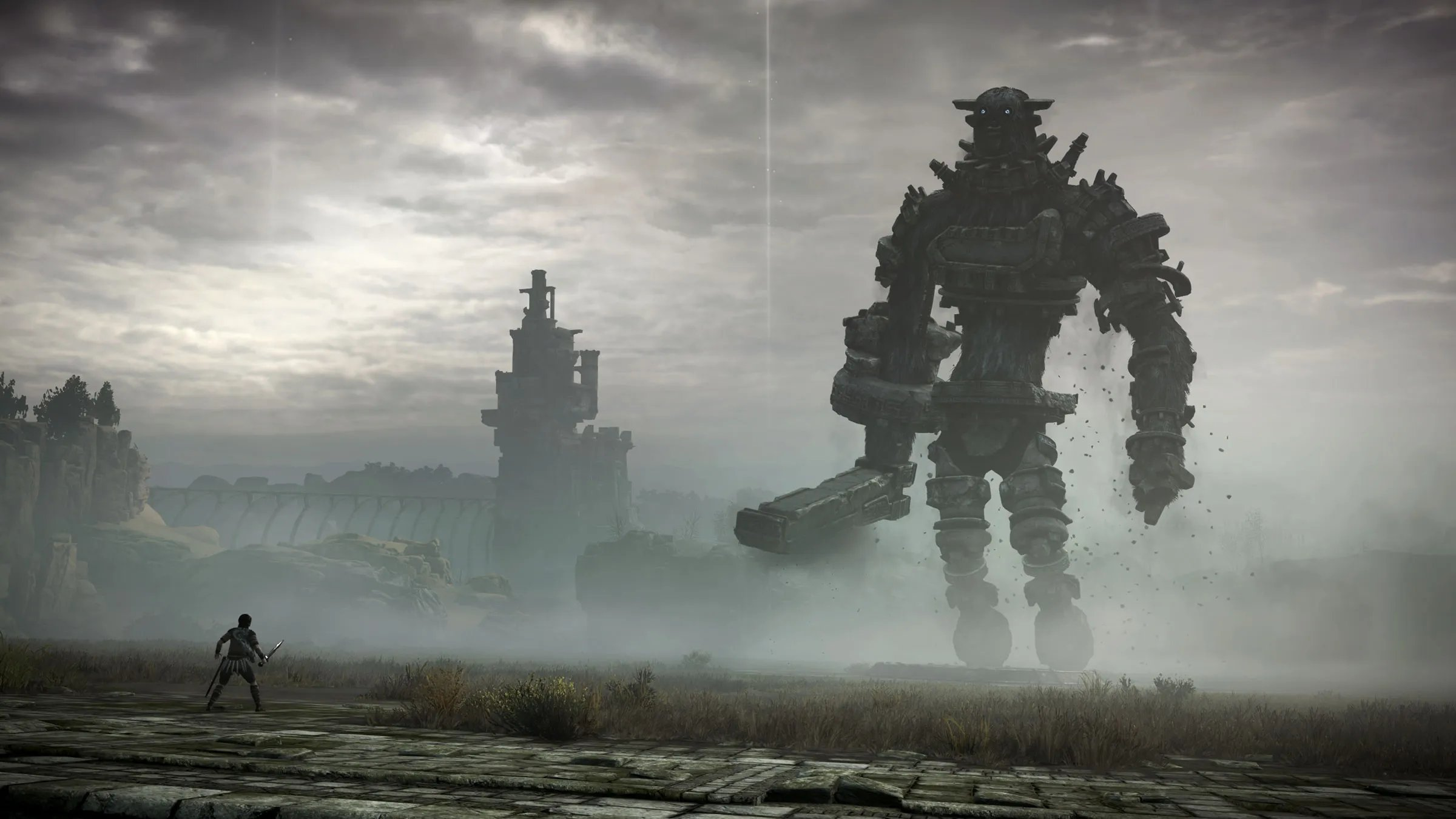
“How do games intrinsically motivate players to explore” is a favorite #GameDesign topic of mine.
Many of the games that do this achieve it partially by evoking a sense of awe while exploring their worlds.
Let’s talk about how that works in games.

The core question is: how do you make sure that the player sees what they need to see?
Lots of strategies. “Detective vision” is one that works in some cases that are otherwise hard to solve for.
GameDesign rambles-
I love moments of “recontextualization” in game worlds.
This is part of why exploring in Zelda or Metroidvania games feels good, why you keep coming back to stages in Pokemon Snap… and why live-service games can struggle to give those feelings.

I recently posted a challenge to game designers to share more of their documentation, so academia had more examples to learn from. And then I posted an Outline of Game Documentation, with some high level descriptions of different types of game design documents. Time for me to share some!
Previously I shared a bunch of character specs from Infinite Crisis. These were finalized spec documents, representing the end point of a long iterative design process before production on the character began in earnest. This time let’s look at some of the documents that I wrote as part of that design process.
I recently posted a challenge to game designers to share more of their documentation, so academia had more examples to learn from. And then I posted an Outline of Game Documentation, with some high level descriptions of different types of game design documents. Time for me to share some!
From 2012-2014 I worked on a DC Comics MOBA called Infinite Crisis. I was one of the Champion Designers: our team was responsible for designing the character abilities and overall balance. Generally, a given character would be owned by a single designer from start to finish, and over months of design iteration (which I’ll cover in another post), we’d eventually reach a state where we were confident in the design we were going to make. At that point the designer would write their first draft of the complete “Character Spec” document.

Let’s talk about high vs low granularity in game design, which has always been one of my favorite topics. From Wikipedia: “Granularity refers to the extent to which a material or system is composed of distinguishable pieces”.
In the context of game design, many things can be either high or low granularity, such as:

Fifteen years after Ocarina of Time, the Zelda team finally retired its time-worn solutions to the problems of 3D. They shifted their philosophy, drew from the inspiration for the first Legend of Zelda, and rebuilt the beating heart of the franchise from first principles.
Previously we examined the challenges of building the first 3D Zelda, and the tradeoffs that Ocarina made to maintain approachability. These compromises attempted to balance two unsolved problems: decreased readability, and greatly increased complexity. In this final article, we’ll see how Breath of the Wild found new solutions to those problems.

Ocarina of Time was a seminal masterpiece. It was a model for how to make a third-person, 3D adventure game that was approachable and ambitious.…

“I wanted something that players could get so lost in, it would take them a whole year to finish.” – Shigeru Miyamoto, 1992 ¹…

Preface (3/23/2015): I originally wrote this article three years ago, when I was just beginning my design career. It was half proposal, half exploration of design concept.…
Preface (3/24/2015): I wrote this four years ago, when I was still working in QA. I had never worked on a MOBA , or played…